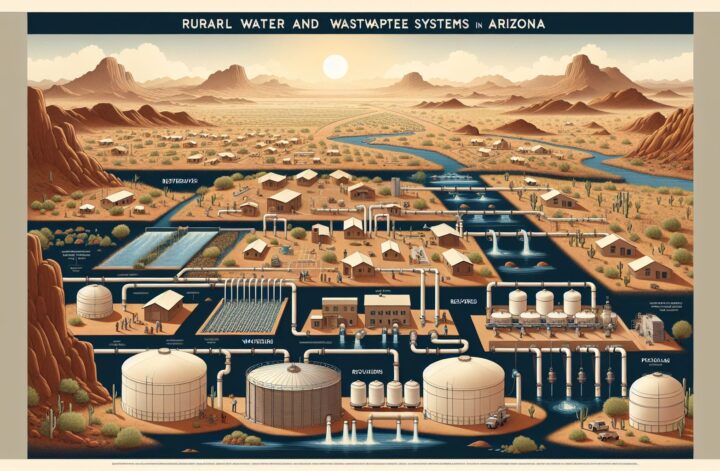
Rural areas of Michigan have long been contending with challenges regarding their water and wastewater systems. Over the last few decades, deteriorating infrastructure, paired with increasing water quality standards and a lack of funding, have significantly compounded the matter, affecting not just the accessibility but also the quality of water services across rural Michigan.
In rural Michigan, most water and wastewater systems are community-based and, in some cases, privately owned. Compounding this situation is the aging of such systems – a problem not exclusive to Michigan but emblematically affecting it. According to the Michigan Department of Environment, Great Lakes, and Energy, many rural water and wastewater systems have been operating beyond their expected lifespan, leading to increased maintenance costs and issues with service reliability.
Water contamination is a significant concern in these systems. The infamous Flint water crisis brought Michigan’s water problems to national attention, highlighting not just the consequences of contaminated water but also the financial challenges in addressing contamination issues. Moreover, due to dispersed populations in rural areas and aging infrastructure, incidences of leakages and breaches are higher, leading to potential contamination of groundwater sources (Michigan Infrastructure Report Card).
Rural areas in Michigan face unique challenges concerning wastewater treatment as well. Many households are not connected to central sewage systems and rely on onsite septic systems instead. However, many of these septic systems are outdated and are failing, posing significant environmental and public health risks. According to a report from Bridge Michigan, failing septic systems have released an estimated 31 million gallons of untreated sewage into Michigan’s surface and groundwater daily.
Efforts to improve these systems have been underway, with the Michigan Department of Environment, Great Lakes, and Energy offering funding programs such as the Clean Water State Revolving Fund (CWSRF) and the Drinking Water State Revolving Fund (DWSRF). However, these programs often face heavy competition and are not available to privately-owned systems, which are prevalent in rural areas.
The rural water and wastewater systems in Michigan capture where many small communities in the United States find themselves: grappling with decaying infrastructure, shrinking budgets, and a future where clean water remains uncertain. These communities underscore an urgent need for investments in infrastructure, policy changes, and innovative solutions to ensure their water and wastewater systems’ sustainability and resilience.
Sources: