
Rural Water and Wastewater Treatment: Challenges and Solutions
Introduction
Access to clean water and effective wastewater treatment are fundamental human rights and crucial for public health, environmental protection, and sustainable development. While urban areas often benefit from centralized water and wastewater infrastructure, rural communities face unique challenges in accessing these essential services. When rural water smells bad, it affects the whole neighborhood. Wastewater treatment plants use sewage odor neutralizers for eliminate the smell and save communities from this smell. This article explores the complexities of rural water and wastewater treatment, examining current issues, innovative solutions, and the path forward for ensuring clean water and sanitation for all.
Rural areas, home to approximately 45% of the global population, often lack the resources, infrastructure, and technical expertise necessary for implementing and maintaining effective water and wastewater treatment systems. The consequences of inadequate treatment are far-reaching, impacting human health, environmental quality, and economic development. As we progress towards achieving the United Nations Sustainable Development Goals, particularly Goal 6 (Clean Water and Sanitation), addressing the specific needs of rural communities becomes increasingly critical.
Current Challenges in Rural Water and Wastewater Treatment
1. Limited Infrastructure
One of the primary challenges facing rural areas is the lack of extensive water and wastewater infrastructure. Unlike urban centers with centralized treatment plants and extensive pipeline networks, rural communities often rely on decentralized systems or, in some cases, have no formal systems at all. The cost of extending centralized infrastructure to sparsely populated areas is often prohibitively expensive, leaving many rural residents to depend on individual wells for water supply and septic systems for wastewater treatment.
2. Water Scarcity and Quality Issues
Many rural areas face water scarcity issues, particularly in arid and semi-arid regions. Climate change exacerbates this problem, leading to more frequent and severe droughts. Additionally, the quality of available water sources can be compromised due to various factors:
- Agricultural runoff containing pesticides and fertilizers
- Naturally occurring contaminants like arsenic or fluoride
- Industrial pollution in areas with mining or other industrial activities
- Microbiological contamination from improper waste management
3. Limited Financial Resources
Rural communities often have limited financial resources to invest in water and wastewater infrastructure. The cost per capita for treatment systems tends to be higher in rural areas due to the dispersed population. Moreover, many rural economies are based on agriculture or other industries that may not generate sufficient revenue to support extensive water projects.
4. Lack of Technical Expertise
Operating and maintaining water and wastewater treatment systems requires specialized knowledge and skills. Rural areas often face challenges in attracting and retaining qualified personnel to manage these systems. This can lead to improper operation, inadequate maintenance, and ultimately, system failures.
5. Regulatory Challenges
While regulations exist to ensure water quality and environmental protection, enforcing these standards in rural areas can be challenging. Limited resources for monitoring and enforcement, combined with the decentralized nature of rural systems, can result in inconsistent compliance with water quality standards.
6. Cultural and Social Factors
In some rural communities, traditional practices and beliefs may conflict with modern water and wastewater treatment approaches. For example, open defecation or the use of untreated water sources may be deeply ingrained in local culture, making it challenging to implement new systems or change behaviors.
Water Treatment Methods for Rural Areas
Addressing the unique challenges of rural water treatment requires innovative and adaptable solutions. Here are some of the methods and technologies being employed or developed for rural water treatment:
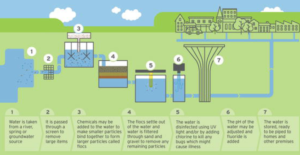
1. Point-of-Use (POU) and Point-of-Entry (POE) Systems
These small-scale treatment systems are designed to treat water at the point of consumption (POU) or where water enters a building (POE). They are particularly useful in rural areas where centralized treatment is not feasible.
- Filtration Systems: Various filtration methods, including ceramic filters, biosand filters, and membrane filters, can effectively remove particulates and pathogens from water.
- Ultraviolet (UV) Disinfection: UV light can inactivate harmful microorganisms without the use of chemicals, making it a low-maintenance option for rural areas.
- Reverse Osmosis (RO): While more energy-intensive, RO systems can effectively remove a wide range of contaminants, including dissolved solids and some chemicals.
2. Community-Based Water Treatment Plants
Small-scale treatment plants designed to serve a village or a cluster of households can provide a middle ground between individual POU systems and large centralized plants.
- Slow Sand Filtration: This low-tech, low-maintenance method uses biological processes to purify water and can be effective for small communities.
- Package Plants: Pre-fabricated treatment units that combine multiple treatment processes can be shipped to rural areas and quickly installed.
3. Groundwater Treatment
Many rural areas rely on groundwater sources, which may require specific treatment approaches:
- Aeration: For removing dissolved gases and oxidizing iron and manganese.
- Ion Exchange: Effective for removing hardness, nitrates, and other ionic contaminants.
- Adsorption: Activated carbon or other adsorbents can remove organic contaminants and improve taste and odor.
4. Solar-Powered Treatment Systems
Harnessing solar energy for water treatment can provide sustainable solutions in areas with limited access to electricity:
- Solar Distillation: Using solar heat to evaporate and condense water, removing contaminants in the process.
- Solar-Powered UV Disinfection: Combining UV treatment with solar panels to provide off-grid disinfection capabilities.
5. Biological Treatment Methods
Leveraging natural biological processes can provide effective and low-maintenance water treatment options:
- Constructed Wetlands: Engineered systems that use plants and microorganisms to treat water, mimicking natural wetland processes.
- Algal Treatment Systems: Using algae to remove nutrients and some contaminants from water while producing biomass.
Wastewater Treatment Approaches for Rural Areas
Effective wastewater treatment is crucial for protecting public health and the environment. Rural areas face unique challenges in managing wastewater, but several approaches have proven effective:
1. Septic Systems
The most common form of rural wastewater treatment, septic systems treat wastewater on-site through settling and biological processes.
- Conventional Septic Systems: Consist of a septic tank for primary treatment and a drain field for further treatment and dispersal.
- Advanced Septic Systems: Incorporate additional treatment steps, such as aerobic treatment units or media filters, to improve effluent quality.
2. Constructed Wetlands
These engineered systems use natural processes to treat wastewater:
- Surface Flow Wetlands: Resemble natural marshes and are effective for polishing pre-treated wastewater.
- Subsurface Flow Wetlands: Wastewater flows through a porous medium planted with wetland vegetation, providing more intensive treatment.
3. Lagoon Systems
Lagoons are shallow basins that use natural processes to treat wastewater:
- Facultative Lagoons: Combine aerobic and anaerobic processes in different layers to treat wastewater.
- Aerated Lagoons: Use mechanical aeration to enhance treatment efficiency.
4. Small-Scale Treatment Plants
Compact treatment plants designed for small communities can provide more intensive treatment than septic systems:
- Sequencing Batch Reactors (SBR): Provide biological treatment in a single tank through a series of treatment cycles.
- Membrane Bioreactors (MBR): Combine biological treatment with membrane filtration for high-quality effluent.
5. Decentralized Wastewater Systems
These systems treat wastewater from a cluster of homes or a small community:
- Cluster Systems: Collect wastewater from multiple homes for treatment at a centralized location within the community.
- Recirculating Sand Filters: Provide advanced treatment through multiple passes through a sand medium.
6. Ecological Sanitation (EcoSan) Systems
EcoSan approaches focus on resource recovery and reuse:
- Composting Toilets: Treat human waste through aerobic decomposition, producing a usable soil amendment.
- Urine Diversion Systems: Separate urine for use as a fertilizer, reducing the volume of waste requiring treatment.
Innovations and Future Directions
The field of rural water and wastewater treatment is rapidly evolving, with new technologies and approaches emerging to address long-standing challenges:
1. Smart Water Systems
Integrating sensors, data analytics, and remote monitoring capabilities can improve the management and efficiency of rural water systems:
- Leak Detection: Advanced sensors and analytics can quickly identify and locate leaks in distribution systems.
- Water Quality Monitoring: Real-time monitoring of water quality parameters can ensure safe water delivery and prompt response to contamination events.
- Predictive Maintenance: Data-driven approaches can anticipate equipment failures and optimize maintenance schedules.
2. Nature-Based Solutions
Leveraging natural processes and ecosystems can provide sustainable and cost-effective treatment options:
- Phytoremediation: Using plants to remove contaminants from water and soil.
- Mycofiltration: Employing fungi to filter and break down pollutants in water.
- Biomimetic Technologies: Developing treatment processes inspired by natural systems, such as the water filtration capabilities of mangrove roots.
3. Advanced Materials
New materials are enhancing the effectiveness and efficiency of water and wastewater treatment:
- Nanotechnology: Nanofibers and nanoparticles can provide highly effective filtration and catalytic treatment processes. They are the best for chemical water treatment for clean water
- Graphene-Based Membranes: Offering superior water purification capabilities with lower energy requirements.
- Bio-Inspired Materials: Developing materials that mimic natural water purification processes, such as the structure of fish gills.
4. Renewable Energy Integration
Incorporating renewable energy sources can make rural water and wastewater treatment more sustainable and resilient:
- Solar-Powered Desalination: Using solar energy to power small-scale desalination units for brackish water treatment.
- Wind-Powered Aeration: Harnessing wind energy for wastewater aeration in lagoon systems.
- Microbial Fuel Cells: Generating electricity from wastewater treatment processes to power other aspects of the system.
5. Circular Economy Approaches
Viewing wastewater as a resource rather than a waste product can create new opportunities:
- Nutrient Recovery: Extracting phosphorus and nitrogen from wastewater for use as fertilizers.
- Biogas Production: Capturing methane from anaerobic wastewater treatment for energy generation.
- Water Reuse: Treating wastewater to standards suitable for irrigation or industrial use, reducing pressure on freshwater sources.
6. Reed Beds
Due to their cost-effectiveness, simplicity, and sustainability, Reed beds play a crucial role in wastewater treatment, especially in rural areas. These engineered systems, often part of Ecological Sanitation (EcoSan) efforts, mimic natural wetlands to purify water through physical, chemical, and biological processes. They are particularly beneficial for communities with limited financial resources as they require minimal maintenance and operational costs.
In reed beds, plants such as reeds interact with microorganisms in the soil to break down contaminants. This treatment process not only reduces pollution but also supports local ecosystems, increases biodiversity, and adds aesthetic value. Reed beds can be classified into horizontal and vertical flow systems, each designed for specific environmental and treatment requirements.
Moreover, reed beds create habitats for wildlife and play a part in carbon sequestration, reducing greenhouse gas effects. They have been effectively integrated into sustainable water management practices worldwide, from small-scale rural installations to larger urban and industrial applications. While challenges exist, the continuous innovation and research improvements make reed bed systems adaptable to various climates and scalable for different waste volumes, adaptable to current and future environmental management strategies.
Policy and Governance Considerations
Addressing rural water and wastewater challenges requires not only technological solutions but also supportive policies and governance structures:
1. Integrated Water Resource Management (IWRM)
Adopting an IWRM approach can help balance competing water needs and ensure sustainable management of water resources in rural areas:
- Watershed Protection: Implementing policies to protect water sources from pollution and overexploitation.
- Water Allocation: Developing fair and efficient systems for allocating water resources among different users.
- Stakeholder Engagement: Involving local communities in water management decisions and implementation.
2. Capacity Building and Training
Investing in human capital is crucial for the long-term sustainability of rural water and wastewater systems:
- Technical Training: Providing ongoing training for operators of water and wastewater systems.
- Community Education: Raising awareness about water conservation, hygiene, and the importance of proper sanitation.
- Knowledge Sharing: Facilitating the exchange of best practices and lessons learned among rural communities.
3. Financing Mechanisms
Developing innovative financing approaches can help overcome the financial barriers to rural water and wastewater infrastructure:
- Microfinance: Providing small loans to households for water and sanitation improvements.
- Public-Private Partnerships: Leveraging private sector expertise and capital for rural water projects.
- Results-Based Financing: Tying funding to measurable improvements in water and sanitation outcomes.
4. Regulatory Frameworks
Adapting regulations to the specific context of rural areas can improve compliance and outcomes:
- Tiered Standards: Implementing water quality standards that account for the realities of rural systems while still protecting public health.
- Decentralized Management: Empowering local authorities to oversee and enforce water and wastewater regulations.
- Performance-Based Regulations: Focusing on outcomes rather than prescriptive technological requirements.