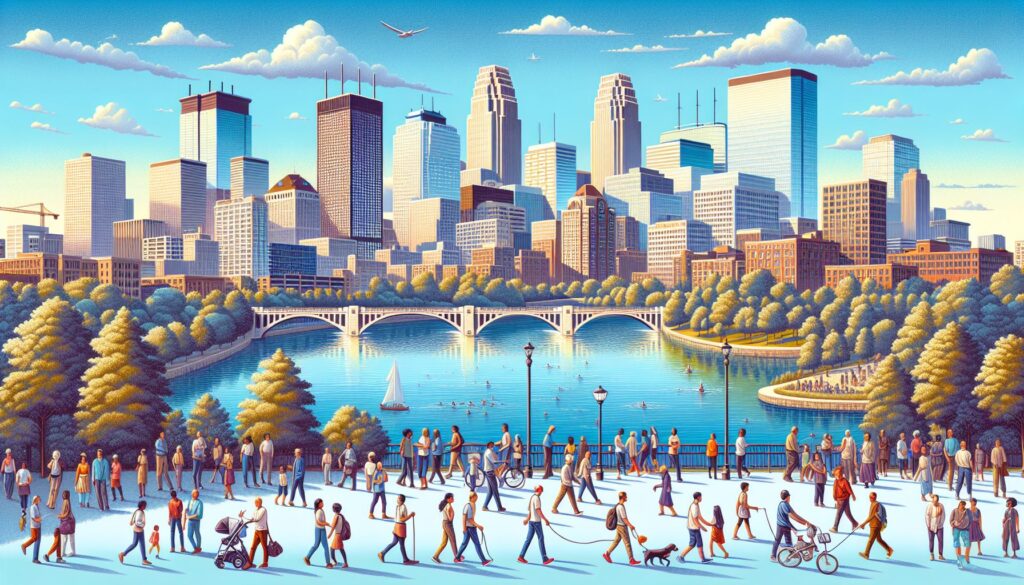
Minneapolis is the most populous city in the US state of Minnesota and the seat of Hennepin County. With an estimated population of 429,606 as of 2019[^1^], it is the 46th most populous city in the US. This article is an exciting exploration of Minneapolis, its history, culture, and local attractions.
History
Minneapolis is situated on the ancient site of two Native American settlements. Established by the Dakota Sioux more than 10,000 years ago, the on-site archaeologists of the Minnesota Historical Society have labeled the settlements as “On-The-Mississippi” and “On-The-St-Anthony”.
The city was founded by neighboring Fort Snelling, built in 1819[^2^]. The soldiers from the fort built a sawmill and a flour mill, which was the first of the 34 to be built in the next fifty years. By 1850, the traffic around the falls had led to enough settlements that the territorial legislature allowed Minneapolis to be officially recognized as a city.
Culture
Characterized by a mix of contemporary and historic architecture, Minneapolis is rich in the culture reflected in various visual arts, theatre, and music scenes. Home to both the Guthrie Theater and the First Avenue nightclub, Minneapolis has made significant contributions to art, folk, funk, and alternative rock music.
The city plays host to some notable cultural landmarks like the Walker Art Center, a contemporary art museum, and the adjacent Minneapolis Sculpture Garden, famous for the iconic Spoonbridge and Cherry sculpture. Minneapolis also has more theater seats per capita than any US city except New York[^3^], showcasing the city’s love for arts.
Local Attractions
Minneapolis offers a wide range of attractions for visitors of all interests. From parks and nature reserves to art museums, there is something for everyone in this city.
Minnehaha Park, one of the city’s oldest and most popular parks, features a 53-foot waterfall, limestone bluffs, and river overlooks. Roosevelt Lake is an ideal destination for those seeking outdoor activities, offering swimming, fishing, and boating facilities.
The Mill City Museum is another must-visit. Built into the ruins of a flour mill, this museum offers an insight into the intertwined histories of the flour industry, the river, and the city of Minneapolis.
Lake Harriet is a popular spot for outdoor enthusiasts, featuring biking and walking paths, boat rentals, two beaches, and a bandshell for summer concerts. The Lake features Victorian-style buildings, including a pavilion, boat house, and bandshell, reflecting the city’s past.
Nicollet, known as “eat street,” is home to a diverse range of restaurants, coffee shops, and grocers. It’s the city’s culinary heartbeat enticing food lovers from all over the country.
Conclusion
With its mix of natural beauty, rich history, and vibrant culture, Minneapolis truly is a gem in the heart of the Midwest. Whether you’re an outdoor enthusiast, a history buff, or a foodie, this city has something to offer you. Come and experience the charm of Minneapolis.
[^1^]: “City and Town Population Totals: 2010-2019”. United States Census Bureau. Retrieved December 10, 2020.
[^2^]: “Fort Snelling”. Mnhs.org. Minnesota Historical Society. Retrieved November 15, 2020.
[^3^]: “Theaters in Minneapolis are the center of a bustling film scene”. Star Tribune, November 18,2017.